


The Jason Arday ‘memoir’ that now appears to be more fiction than fact
The Jason Arday ‘memoir’ that now appears to be more fiction than fact

Leaf ArbuthnotSat, August 8, 2026 at 5:30 AM UTC
0
Earlier this year, shortly after it was announced that the publisher Simon & Schuster had bought the rights to Jason Arday’s memoir, the then professor of sociology of education at Cambridge University gave an interview to The Bookseller. “I always wanted to be a person who flew close to the sun,” Arday mused. “But sometimes I wonder: did I fly too close?”
On the evidence of his book – due to be published in the UK on August 27 – and all that has emerged about Arday in recent weeks, the answer is probably yes. Titled Great and Unfortunate Things, the memoir might have been more honestly named Great and Improbable Things. This week, suspicions were raised about whether Arday’s resignation letter, in which he announced his intention to leave his post at Cambridge, was written by AI; the casual reader of Great and Unfortunate Things might suspect the ghostly hand of AI too – although the book was apparently written in collaboration with the definitely human writer Eve Claxton.
Arday, as we now know, is well used to making extravagant claims about his life. Since The Telegraph launched its investigation, questions have swirled around the authenticity of his PhD thesis, while he has been found to have exaggerated purported feats, such as single-handedly raising £5.5m for charity, academic posts he has apparently filled, and multiple athletic achievements (semi-professional footballer; 600 miles of running in six days). In the last week, The Telegraph revealed that Arday claimed he had featured in a television programme, Seven Up, broadcast before he was born, and that he even falsely claimed to have published a book with the impeccably believable title Being Young, Black and Male: Challenging the Dominant Discourse.
What is slightly unexpected about the book that Arday has actually written is that it is – at least on the surface – painfully, mind-numbingly dull. Anyone with a passing familiarity with LinkedIn will find much to recognise in its tone: gushing, earnest, slyly self-promotional, oddly impersonal. The book feels powered by a grim determination to inspire readers come what may, and to settle the debate once and for all about the absolute awesomeness of its subject, Jason Arday. Yet to do so it relies on a narrative that, with everything we now know about his habitual false claims, stretches credulity to breaking point.
Weaponised vagueness
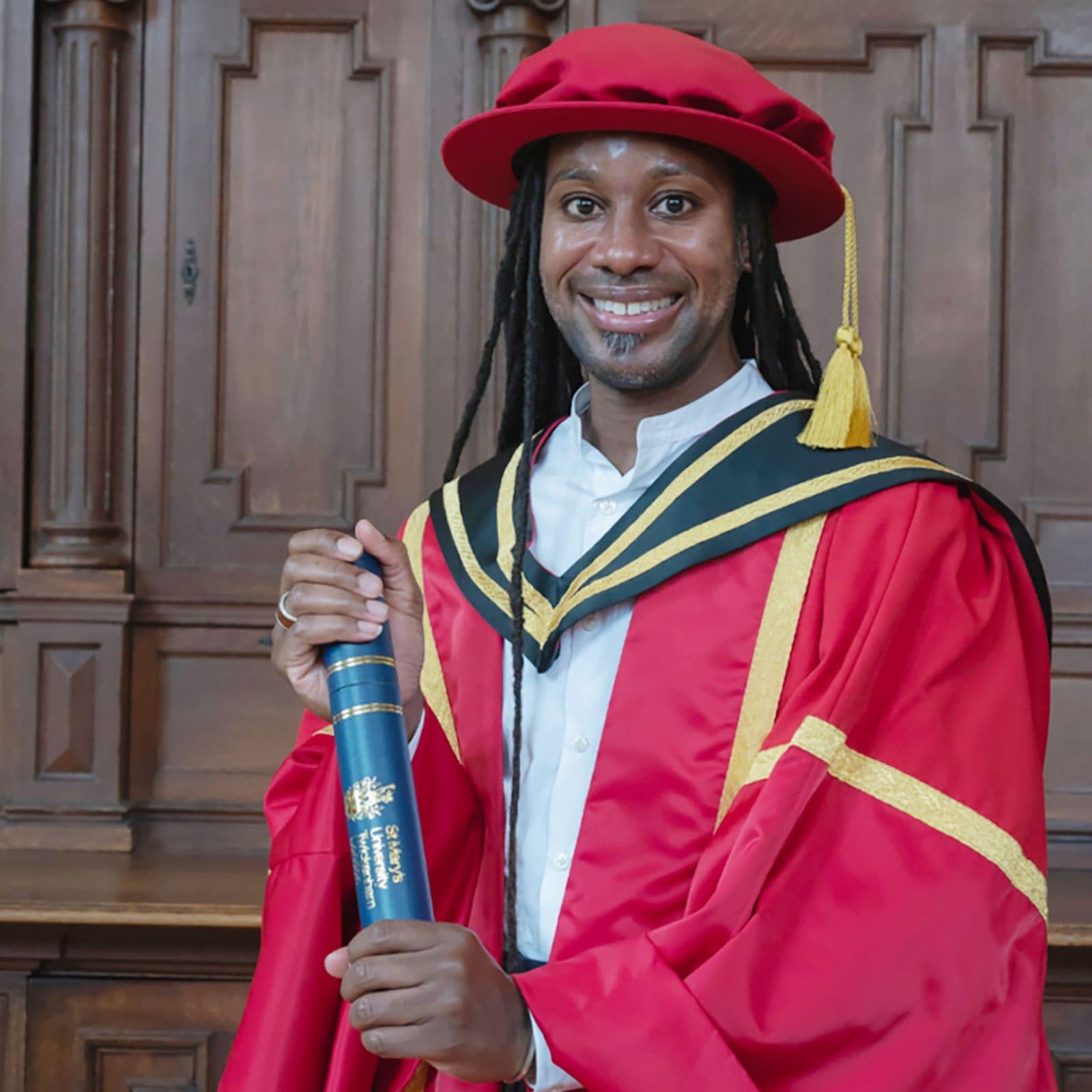
Jason Arday receiving an honorary doctorate from St Mary’s University, Twickenham, in 2024. His remarkable educational story is now under scrutiny
One striking feature is that the book is suspiciously stingy on detail: years, ages and last names are often withheld. Much of the kind of information, in short, that journalists and suspicious academics might have liked to be able to check is not included. The amount of money that Arday has raised for charity over the years, for instance, is kept ambiguous. Instead, the reader is fed platitudes such as “It was ingrained in me to devote myself to charity work whenever I could”, and “I’d taken part in all kinds of fundraising drives”.
This vagueness is not consistently applied, however. While much is made of the fact that Arday was unable to speak until he was 11, he is nonetheless able to recall incidents before that age in strangely crystalline detail. When he is around seven, for instance, he remembers being taken by his mother to a Stephen Lawrence march. “The air was thick with tension, rage and grief,” Arday writes evocatively. The crowd around him is “demanding the CPSbring murder charges” and chanting in unison: “No justice, no peace… stop killing our young.”
Quite how the young, mute Arday was able to grasp the crowd’s desire for Crown Prosecution Service murder charges is not elucidated. And we are informed that the Stephen Lawrence protest was just one of many protests that he attended with his mother. Yet throughout the book, the severity of his autism is also stressed: Arday cannot tolerate “loud noises”, even the sound of a fork “scraping on a plate”. Nonetheless, we are expected to believe that his mother routinely subjected him to the cacophony of protests, and also that he understood the import of these protests despite being apparently unable to wield words.
Self mythologisation
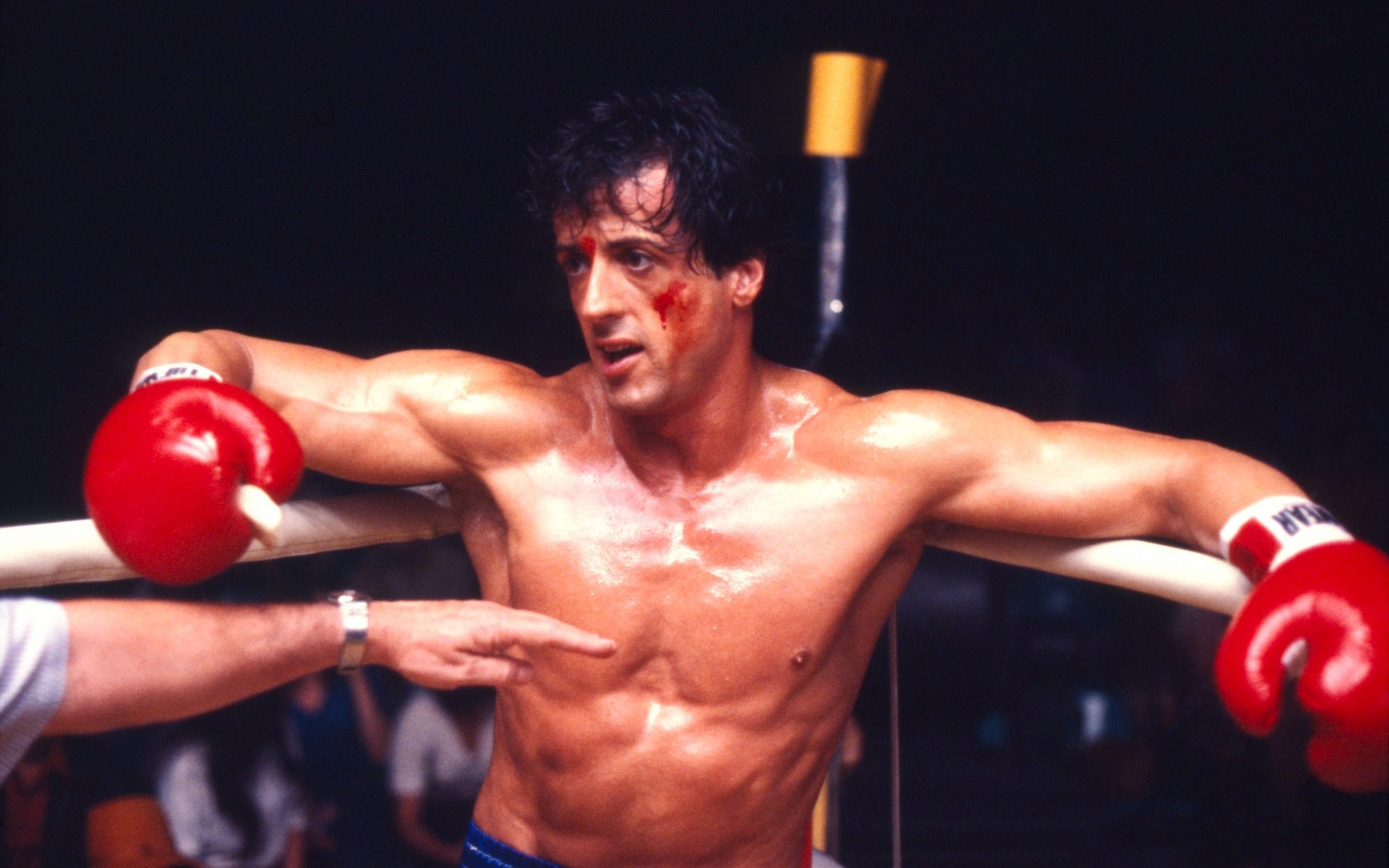
Sylvester Stallone as Rocky, boxing’s Jason Arday - James Drake/Getty
A more amusing thread running through the book is Arday’s almost impressive ability to draw parallels between himself and major figures from cultural history, all while ambiently stressing his humbleness and simplicity of heart. He was named by his mother after Jason and the Argonauts – a good thing too, he notes: “She couldn’t have known then that my life would involve so many trials, obstacles and tests of courage, just like that of my mythological namesake with his quest for the Golden Fleece.”
Arday also draws parallels between himself and Forrest Gump, the slow-witted character who becomes a war hero, sports star and shrimping millionaire – while insisting that it was his mother who alerted him to such parallels (“If you look at your story and you look at Forrest Gump, there are similarities there,” she tells him). Then there are the many comparisons drawn between Arday and Rocky, the boxer played by Sylvester Stallone in the 1976 blockbuster. “What I took from the story was that even if I didn’t have the skills to do something, I had heart, and if I kept going, I could make it to the final bell,” he writes.
At various moments of crisis in the book, characters refer to Rocky – apparently spontaneously – to encourage Arday to keep fighting the good fight. This occurs most excruciatingly when one of Arday’s mentors, Sandro, reminds him of a scene from Rocky IV, in which Rocky’s son asks him whether he is ever frightened when he goes into the ring. Happily, Arday knows exactly what scene Sandro is talking about – and can intuit at once how it relates to his own life. “I knew that scene off by heart,” he confesses.
Prophets of greatness
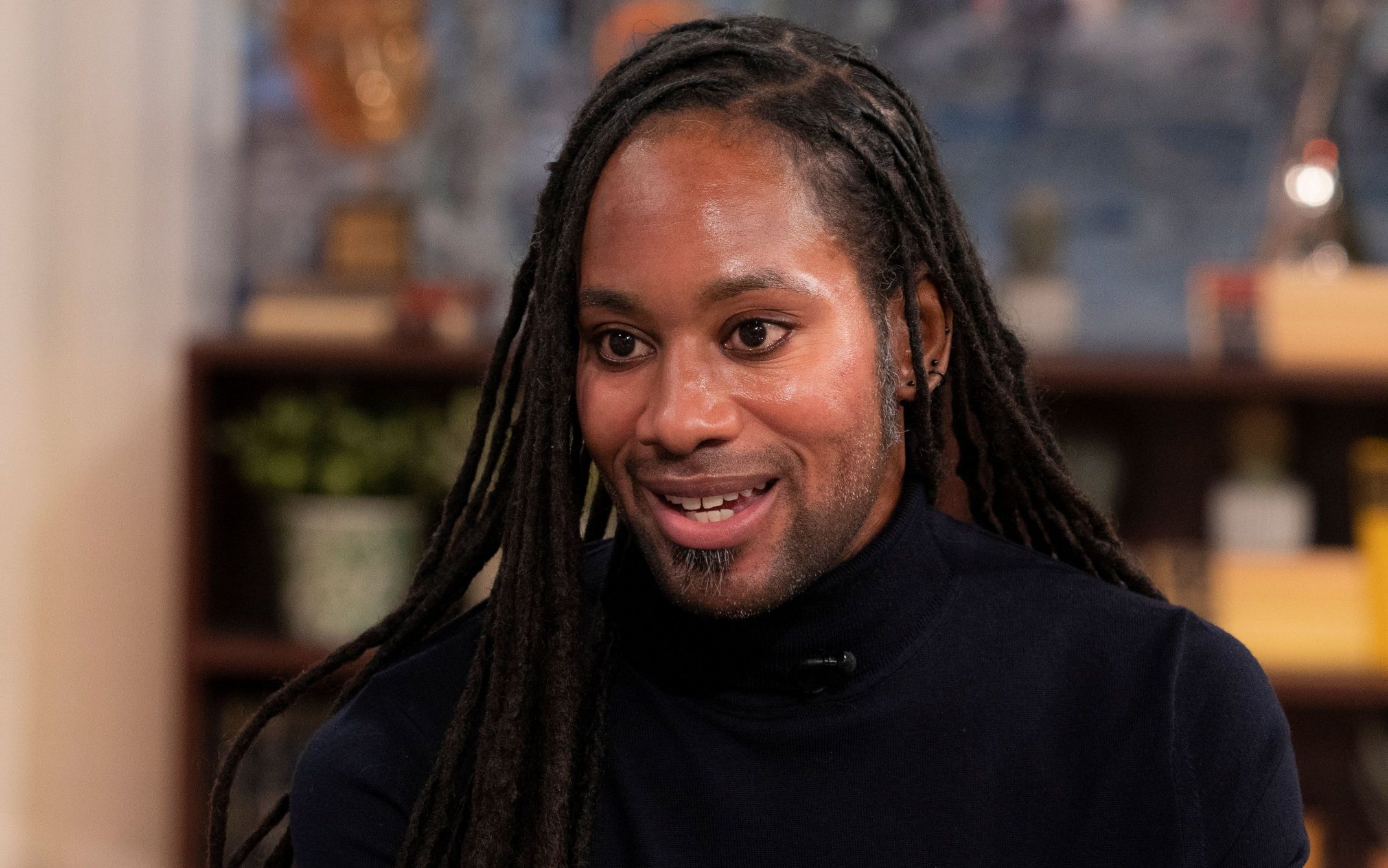
Arday’s memoir repeatedly emphasises the nobility and uniqueness of its author - Ken McKay/ITV/Shutterstock
Characters in the book, by and large, fall into two camps: the evil idiots who are cruel to Arday and fail to grasp his potential, and the angels who help him, mentor him, and express their ardent certainty that he is extraordinary.
This division of the cast into angels and enemies is established early on, when Arday’s mother, Giff, is treated to a powerful prophecy by the South Asian midwife who has delivered him. “This boy is destined for great things,” the midwife tells Arday’s mother, looking into her eyes. “You hear? You take care of this child.”
Something similar happens when Arday is 21, and on what he describes vaguely as a “relief mission in Brazil, working with an organisation installing water pumps in poor communities”. A local aid worker watches Arday as he bends down to help a child. She then tells him “quietly, almost to herself but loudly enough for me to hear: ‘You have a very beautiful heart’”. Nor does she stop there. “I can tell you’re destined to do great things,” she says. “But I also believe you’re destined for very sad and difficult things as well.”
These moments of piercing aperçus, on the essential nobility and uniqueness of Arday’s character, come thick and fast throughout the book. Even Arday’s first girlfriend, Debbie, who teaches him to read and write, seems to regard him as a kind of messiah: when her father objects to their relationship, she defends it on the grounds that Arday is ineffably different. “There’s something about him that’s so special. I can’t put my finger on it. One day he’s gonna do something, and the whole world will see.”
Lest we be in doubt about Debbie’s “unwavering belief” in him, we are told that she writes him “over a hundred handwritten cards”, all bearing the same message: “You’re going to be great. You’re going to do something, and everyone will see.”
Advertisement
Perhaps the most painful moment in which a character expresses their conviction that Arday is superior to the hoi polloi comes when Arday gets a job at Sainsbury’s, and becomes friendly with a fellow worker named Sam. “Jason, I want you to listen to me,” Sam tells him. “I see something in you: you’re fearless. Yes, you’re having to do this job now, but one day you’ll scale Mount Everest, whether anyone thinks you can or not.” This truth duly truth-bombed, Sam conveniently melts away, never to be heard from again.
Short-sighted enemies
Arday’s prophesying angels are set in sharp contrast to the sinister bogeymen of the book – and there are many of them. Chief among the villains are the teachers who scarcely bother to teach him, and the doctors who repeatedly fail him. “There’s no one in there,” they tell his mother callously after he is diagnosed with autism and global developmental delay; her boy is “no better than a vegetable”.
Arday also trains his ire on the “people with clipboards” who look down on him from on high and fail to help him navigate his autism. “I honestly think that if someone had said jumping off a cliff would ‘cure’ me of my autism, they might actually have considered making me do it,” he writes.
Aged 18, with barely two GCSEs to his name, Arday visits a careers service centre called Connexions – and encounters yet another callous naysayer. “So he’s 18 and illiterate and can’t do sums,” the careers adviser, Kathy, says, before suggesting that Arday volunteer at a supermarket to gain some experience. Arday and his mother wait for more suggestions, but Kathy shrugs that she has none. “To be honest with you, it’s a rare case where I can’t give someone some kind of advice,” she says. “But no, there’s really nothing we can do for this person.”
Her cruelty allows Arday’s mother Giff to return to the book’s great theme: Arday’s impending excellence. “You’ve sat here and basically told me that my son will amount to nothing,” she says. “But you’re wrong. One day he will do something great, unfathomable. You will remember this day, and you will regret not doing all you could’ve done to help this person.” The day will even go down in history, Giff warns, as the most important in the career adviser’s entire life – because Kathy will be able to say that she once met Jason Arday.

Curious incidents
The book also includes moments of violence that feel conveniently tricky to fact check. The most terrifying of these is dispensed by a speech therapist named Katrina, who sees him regularly through his childhood. Frustrated by Arday’s enduring muteness, Katrina’s patience starts to wear thin – and then one day, when Arday’s mother is in the waiting room outside, her patience snaps entirely.
Katrina’s “calm-on-the-surface” demeanour cracks, and she puts her hands on Arday’s shoulders. Then, he writes: “She started shaking me. For the first few seconds, I thought it was a game; I actually laughed at the motion of the shaking as it rocked my head back and forth on my neck. But my laughter made Katrina shake me even more vigorously, and my smile quickly vanished as her grip tightened and I felt the pinch of her finger pads digging into the skin on my arms.”
In another moment that rather stretches belief, Arday’s mother is mugged at knifepoint while she has her one-year-old son Joseph with her, and is heavily pregnant with Arday. True to her depiction as a “strong Black African woman”, Giff remains cool under pressure. When the mugger empties her purse and asks whether she has anything else, she replies: “I’m eight-and-a-half months pregnant and I’ve got a one-year-old with me. You’ve taken everything I have, and now you’re asking me if I’ve got more?”
Arday writes that he was himself mugged while in his late teens, at a bus stop by a group of boys about his age. He is beaten so badly he develops epilepsy, we are told; yet when the perpetrators of the crime are identified by police, he nobly insists that they be left to “focus on their education and move forward with their lives”.
Remarkably, years later, by which time Arday has become a lecturer, two of his four attackers turn up in his lecture hall. Arday shows characteristic good grace, writing job and character references for them whenever requested. And when one of them then becomes a father, he asks Arday to be the child’s godfather – and Arday is only too happy to oblige.
Curious absences
Arday’s memoir recounts a succession of extraordinary episodes, including former attackers turning up to his university lectures
Readers hoping to find vivid descriptions of some of Arday’s more colourful tales about his life will, alas, be disappointed. Arday has claimed that a severed pig’s head was delivered to his family home in south London, but the incident is not recorded here. Nor is there any mention of the bananas and bullets he has said he was sent in the post after starting in his role at Cambridge. The claim that a knifeman turned up at the university twice to threaten to harm him unless he resigned is also left out of the book, but would surely have made for absorbing reading. As would the car crash and subsequent three-month coma that he recounted in his initial proposal for the autobiography, but which didn’t make the final book.
We are treated, however, to regretful sermons about the scrutiny Arday has been subjected to because of the fateful combination of his skin colour and his success. When a professor implies that he might be cheating in his coursework (the cheek of it), Arday seizes the opportunity to note that “people who are Black or from other disadvantaged groups” commonly face such scepticism.
“When you succeed against pretty much insurmountable odds, it weirdly makes people question your credibility,” he writes. “‘There must be some glitch in the system,’ they say. Or the most recent version of that: ‘Well, it has to be a diversity hire.’”
Persistent sadness
At points, however, there are glimpses of apparent emotional honesty in the book that make you long for something different: for the book not written. Until 2012, Arday writes, he could count “on one hand” the number of days that he’d experienced “anything like joy”. For most of his life, he continues, he has carried “a feeling of sadness inside me – something I always disguised with a grin”.
The final impression, perhaps, isn’t chiefly that of a serial fabulist who filled a professorship he was unqualified for, but of a profoundly lonely and psychologically troubled man who is unable to quench his thirst for respect and recognition. It is a pity that the book fails to wonder why that might be, and who Jason Arday really is.
Source: “AOL Entertainment”
